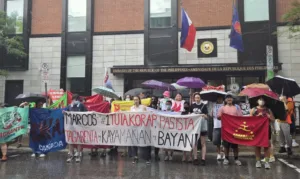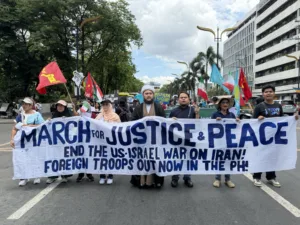

The Philippines has virtually become a playground for troops of US imperialism and its allies as they carry out one military operation after another under the cover of wargames and “freedom of navigation” in the country’s territorial sea. After Balikatan 2026, the US immediately staged the next wargames: Salaknib, Kasangga, and Marine Exercise (MAREX). These were accompanied by US war provocations at sea under the Bilateral Maritime Cooperative Activity.
More than 8,000 troops from the US, Japan, Australia, and the Philippines are participating, with troops from New Zealand and Canada also present in the land-based wargames. Contrary to claims that these are for “external defense,” common to the said wargames are counterinsurgency operations carried out in peasant and fishing communities in the countryside.
In Luzon, the US is conducting Salaknib 2026 with US, Philippine, and New Zealand ground forces, along with the Japan Ground Self-Defense Force. It rehearsed the transfer of military equipment between islands under the so-called “archipelagic defense.” The wargames focused on “training” in guerrilla tactics in the forest, including jungle warfare and small-unit tactics in “real time” conditions. The Joint Pacific Multinational Readiness Center-Exportable (JPMRC-X) was used to set up “jungle combat training centers.” Like Balikatan, this was likely carried out in many undisclosedd locations, aside from the public exercises in Zambales and Northern Luzon. Salaknib runs for three months.
Kasangga 2026-1 was launched on May 26 in Camarines Sur with troops from the Australian Army. It focuses on intelligence and combat operations, along with jungle warfare. Foreign troops had already landed in the province even before the wargame was announced. They used the coastlines and mountainous areas of Pasacao, Balatan, San Fernando, Libmanan, and Ragay. They will stay there for one month.
In Mindanao, the US is conducting MAREX 2026 in Maguindanao del Norte together with the Philippine Marine Corps and the US Marine Rotational Force-Darwin (MRF-D). Like Salaknib, it focuses on jungle patrols outside Camp Iranun and artillery firing near populated areas in Datu Blah Sinsuat and Barira.
At sea, the US Coast Guard launched anti-China provocations under the Bilateral Maritime Cooperative Activity (MCA), which it held near Bajo de Masinloc from May 26 to 30. This further intensified tensions in the South China Sea and amounted to open provocation against China.
Relentless disruption and damage to the people
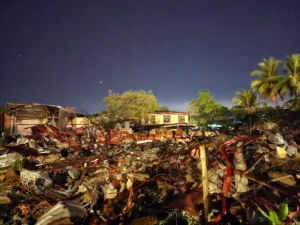
As in previous wargames, these operations severely affected Filipinos. Foreign troops encroach on peasant and fishing communities, restrict residents’ movement, and bar them from their livelihoods. In Bicol, foreign troops were reportedly seen in Barangay Mainit, Pasacao and at least 20 other barangays. Soldiers set up checkpoints along the roads.
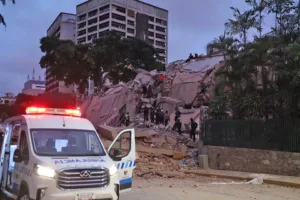
The situation is the same in provinces in Mindanao where foreign troops are present for MAREX. Shelling and checkpoints on the roads have brought fear and disrupted residents’ movement.
In Zambales, the imposed “no sail zone” to make way for the wargames once again barred fisherfolk from their livelihood. The ban covered 11 towns, including Masinloc and Subic. It deprived more than 4,840 fisherfolk of their income in Subic alone. Aside from hunger, residents also complain about damaged corals and fish being driven away by the noise and pollution from the giant warships and missile launches.