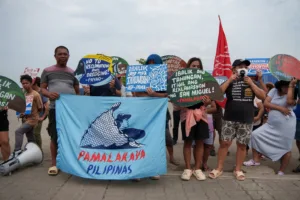

A few days before the National Press Freedom Day on August 30, the College Editors Guild of the Philippines (CEGP) once again called to hold accountable campus press rights violators. Since 2010, CEGP has recorded more than 1,000 cases of campus press freedom violations.
In the previous year alone, CEGP documented at least 206 cases of attacks against campus papers, which intensified especially early in the year due to their critical reporting during the midterm elections.
Cases include censorship, administration intervention, withholding of funds, suspension or expulsion of journalists, harassment, red-tagging, and state surveillance. According to CEGP, the systematic crackdown on campus newspapers worsened because of widespread disinformation pushed by the state, social media censorship, and the culture of impunity worldwide.
“Violations of campus press freedom have long gone unpunished, as they are often deemed inconsequential by school administrators and the government,” CEGP national spokesperson Brell Lacerna said. She added that although some schools implement “protections,” these are superficial and do not meaningfully address the real demands of the publications.
With its continuous defense of campus press rights, CEGP supported the re-filing of the Kabataan Party-list’s Campus Press Freedom Bill in the House of Representatives on August 28. Kabataan has been proposing this bill since 2010 during the 15th Congress, but lack of interest from other lawmakers and bureaucrat-capitalists hindered its progress.
CEGP explained that the bill aims to repeal the “insufficient and toothless” Campus Journalism Act of 1991. The group said the outdated law suppresses the freedom and independence of campus publications in universities nationwide.
CEGP believes that campus press freedom plays an important role in the broader struggle for affordable and quality education. Beyond waiting for the bill’s progress in Congress, the group challenged campus journalists to strengthen their voice for truth and justice to mobilize students and communities.