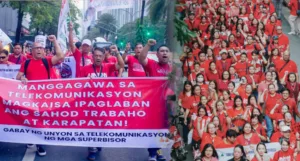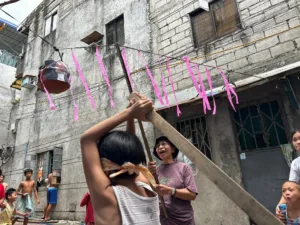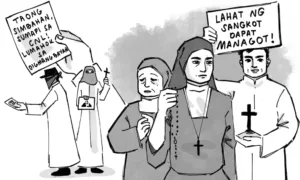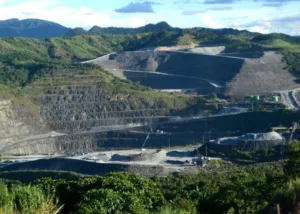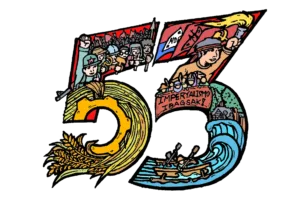

A flood of protests surged in the Philippines as more than 200,000 people across the nation took action on September 21 to condemn rampant corruption, especially in recently exposed flood control projects under the Marcos regime. Major rallies centered at Luneta Park in Manila and the EDSA People Power Monument in Quezon City, while demonstrations and activities also took place in at least 34 provinces.
The nationwide protest was held on the 53rd anniversary of Martial Law and the 14 years of dictatorship under the Marcos Sr regime. The Marcos dictatorship was marked by massive plunder, corruption of public funds, and fascism.
At Luneta Park, more than 100,000 people gathered for the protest “Flood in Luneta: Act Now Against Corruption!” under the Kontra Baha, Kontra Kurakot Network. Youth groups and TAMA NA (Taumbayan Ayaw sa Magnanakaw at Abusado Network Alliance) led the massive demonstration and network.
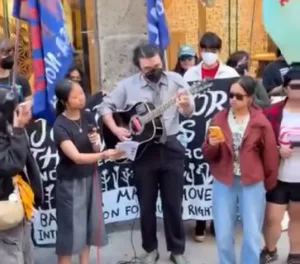
Calls for accountability of all involved in corruption and anomalies resounded in the protest. The program was filled with speeches from different sectors, songs, and various performances. Participants wore black to express indignation.
“All sectors came to Luneta to show our outrage at the rotten system of corrupt contractors and dynasties,” alliance leader Prof. David San Juan said. According to TAMA NA, the protest drew in flood victims, students, teachers, workers, farmers, rappers, riders, bikers, runners, artists, urban poor, punks, PPOP fans, One Piece enthusiasts, Filipino-Chinese, women, senior citizens, LGBTQ+, lawyers, nurses, doctors, church people, families of tokhang victims, social workers, engineers, youth, and veteran activists. Groups from neighboring regions, including Central Luzon and Southern Tagalog, also joined in the protest.
Beyond those who physically attended, San Juan also recognized and thanked the millions who expressed support in different ways and monitored the program. “Our high energy, our continued unity, and our realization that we cannot allow reverting to the past, can achieve much more toward the country we all dream of,” he said.
After the Luneta program, Bagong Alyansang Makabayan (Bayan) led thousands in a march to Mendiola near Malacañang to hold Marcos himself accountable for his corrupt and fascist government. Bayan and its organizations successfully held their program despite police barricades at Mendiola Bridge.
Earlier, violent clashes broke out between police and some youth groups at Ayala Bridge and later at Mendiola. “The people’s anger against corrupt officials and the police who are protecting the rich and powerful was seen today in the violent confrontation between the police and mostly young people in Ayala Bridge and Mendiola,” Bayan said.
Bayan reported that it tried to calm the situation but deep contempt at the police was overwhelming. Bayan president Renato Reyes Jr was hit in the face with a stone, while 12 members of mass organizations under the group were arrested. They condemned police violence and demanded the immediate release of all detained, especially minors.
In the afternoon, TAMA NA proceeded to the EDSA People Power Monument to join the “Trillion Peso March” led by the Church Leaders Council for National Transformation (CLCNT) and other organizations. According to CLCNT, at least 70,000 people joined the protest.
“The Filipino people showed yesterday that our patience with corruption has run out. What we saw at EDSA was not anger for anger’s sake—it was righteous indignation. It was the voice of the poor, the workers, the youth, and ordinary families saying: Enough. This has gone too far. Jail them,” Caritas Philippines president and a CLCNT leader Bishop Colin Bagaforo said.
CLCNT also declared that the EDSA rally was “only the beginning of a larger movement for truth and justice.”
The anti-corruption protest movement was not limited to Metro Manila. As in previous weeks, progressive groups and church people held demonstrations in provinces in Luzon, Visayas, and Mindanao.
Luzon
In Baguio City, more than 5,000 people joined the anti-corruption march led by youth and students from over 120 groups based in the city and neighboring Benguet towns. They held their program at People’s Park.
In Kalinga, a prayer rally was supposed to be held at a park in Tabuk City, but authorities closed the venue despite the permit given to the rallyists. The event was relocated to the front of city hall. Separately, the Cordillera People’s Alliance-Kalinga also held a gathering.
In Ifugao, the Basic Ecclesiastical Community in Alfonso Lista led by the Redemptorist Northern Luzon Mission joined the national protest day at Our Lady of Visitation Parish.
In Abra, Kabataan Partylist Abra held a short program at one of the province’s dilapidated flood control projects, condemning the damage these have brought to the province’s residents.
In Cagayan, hundreds joined a march at Rizal Park in Tuguegarao City. Undaunted by tropical storm Nando’s rains, mainly youth participants pressed on with the protest.
In Isabela, Santiago City students and residents gathered at Mabini Circle Freedom Park and tied white ribbons around the park to call for transparency and accountability.
In Nueva Vizcaya, youth and church people held a gathering and protest at the St. Dominic de Guzman Cathedral in Bayombong.
In Ilocos Norte, around 200 people participated in a protest at the capitol in Laoag City. Organizers considered this a significant blow especially in the turf of the Marcoses who played a big role in the history of corruption. The action united groups under Kilos Ilocos Norte Kontra Korapsyon.
In La Union, about 1,000 individuals protested at Plaza Auditorium in San Fernando City under Kilos La Union Kontra Korapsyon. Gathered together in the protest were progressive groups, farmers, fisherfolk, and church people, with the diocesan bishop in attendance.
In Pangasinan, Dagupan City residents collectively held a prayer vigil and candle-lighting at a gathering at the Parish of St. John the Evangelist.
In Zambales, the newly formed People Against Corruption-Olongapo staged a demonstration at Rizal Triangle Park.
Two gatherings and protests were held in Malolos and Calumpit, both in Bulacan, the province often flooded during the rainy season.
An estimated 1,500 Calumpit residents joined a march along MacArthur Highway in Barangay Poblacion carrying the call “hold accountable all who must be held accountable.” Local government officials of Calumpit led and participated in the protest.
Youth groups and Bulakenyos protested in front of the Bulacan Provincial Capitol in Malolos calling for accountability against corruption. They marched from Malolos Cathedral after the “Mass and Prayer for Accountability.”
On September 20, hundreds of residents waded through floods in Hagonoy to join the “Stand, Hagonoy” protest. They called for action on the worsening problem of flooding amid corruption in flood control projects.
In Pampanga, different groups in Angeles City launched two protests. First, 1,500 members of the Koalisyon Kontra Kurakot (Coalition Against Corruption or KKK) and the Inter-Fraternity and Sorority Solidarity (IFSS) held an action on Heritage Street in front of Holy Rosary Parish. Then around 700 individuals led by Bayan-Central Luzon marched to Plaza Miranda.
On September 18, more than 3,000 joined a large demonstration at Metropolitan Cathedral in San Fernando to condemn corruption. Concerned Citizens of Pampanga led the protest. Hundreds also participated in a local protest launched by Concerned Citizens of San Simon on September 20.
On Mindoro Island, the group Mindoro Kontra Korapsyon led the participation of groups on the day of action. Youth and students in Oriental Mindoro protested in front of Calapan City Plaza to condemn corruption. Indigenous Mangyan groups also held a picket in Barangay Poblacion, Abra de Ilog, Occidental Mindoro to express the impact of flooding and corruption on them.
In Palawan, nearly 4,000 residents gathered at Seminario de San Jose in Puerto Princesa to collectively pray and protest against corruption.
In Camarines Norte, youth, church people, and other groups protested at the Rizal Monument in Daet.
In Camarines Sur, the Bayan chapter led the protest that also marked the 53rd anniversary of the declaration of Martial Law.
In Albay, at least 2,000 people participated in an activity and march against corruption. Groups marched from Redemptorist Church to Pinaglabanan Monument in Legazpi City. Youth, church people, professionals, and other sectors joined arms in the protest.
In Sorsogon, simultaneous protests took place in Sorsogon City and several towns, led by youth and church groups.
In Catanduanes, many Catandunganon participated in the protest and march at Imelda Boulevard, Virac. Most participants were youth, and they collectively sang protest songs.
Visayas
Up to 15,000 people joined the anti-corruption rally in Iloilo City. The main bulk came from students and progressive groups who marched from the University of the Philippines-Visayas Iloilo Campus, while church people and other sectors came from Jaro Plaza. In the evening, a Concert Against Corruption was held at the Iloilo Provincial Capitol Grounds.
In Antique, hundreds joined a protest led by environmental group Amlig Antique Alliance at EBJ Freedom Park outside the Antique Provincial Capitol. Groups also held actions in Aklan and Capiz.
In Bacolod City, more than 10,000 protested and marched toward Bacolod Public Plaza. The large action was led by One Negros Ecumenical Council (ONE-C). In Dumaguete City, hundreds of youth and individuals gathered at North Rizal Boulevard Area to protest.
In Cebu, hundreds marched in Cebu City led by progressive groups calling for accountability and justice. The march traversed Colon Street to Fuente Osmeña Circle. Cebu had the second highest fund allocation for supposed flood control projects.
In Bohol, an estimated 4,000 also joined a protest led by the church and Lihok Bol-anon (Lihok Bol-anon Batok sa Korapsyon) in Tagbilaran City.
In Tacloban City, groups held a protest at RTR Plaza. They resisted police intimidation and attempts to stop them from protesting and expressing their grievance against government corruption. University of Eastern Philippines students also launched a separate protest on that day.
In Borongan City, the church led the protest at the city plaza. Church leaders and other sectors called for accountability for rampant corruption.
Mindanao
In Cagayan de Oro City, several hundred individuals gathered at St. Augustine Cathedral to jointly call for accountability against corruption. They marched from the cathedral to Vicente de Lara Park. Together with progressive groups, the Promotion of Church People’s Response-Northern Mindanao Region (PCPR-NMR) led and launched a separate protest. They marched from Magsaysay Park to the Press Freedom Monument.
In Marawi City, youth and students from Mindanao State University-Main Campus joined the protest day. More than 30 organizations from MSU-Marawi participated in the rally.
In Davao City, more than 600 people joined the protest at Orcullo Park. Citizens’ Rage Against Corruption led the action.
In Zamboanga City, youth, students, and other sectors also held a protest action.
On September 19, hundreds of youth and residents of General Santos City and Koronadal City joined candle-lighting protests.
Protests were also held by communities of Filipino migrants and overseas workers, staging demonstrations, forums, and activities condemning corruption and marking Martial Law in Japan, South Korea, Hong Kong, Thailand, Australia, New Zealand, the Netherlands, Canada, and the United States.
Groups in all these protests declared they would continue the movement they started to hold those involved in corruption accountable.
Meanwhile, the revolutionary movement in the Philippines extended greetings to the widespread protests launched nationwide. Communist Party of the Philippines information officer Marco Valbuena said the unity of the Filipino people on September 21 can be considered historic.