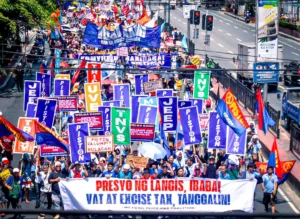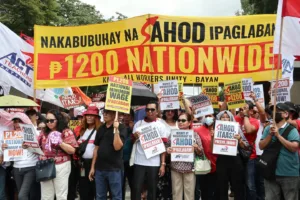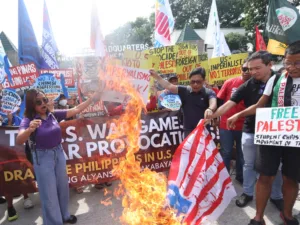

Youth and people in their tens of thousands stormed the streets in the past two weeks to strongly condemn rampant corruption under the Marcos regime. They demanded accountability and imprisonment for officials involved in corruption, especially in flood control projects.
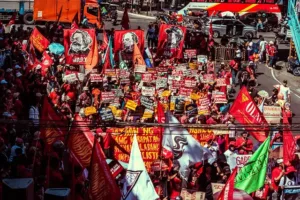
Led by youth groups, the alliance TAMA NA (Taumbayan Ayaw sa Magnanakaw at Abusado Network Alliance), and Bagong Alyansang Makabayan, tens of thousands joined the main gathering at Luneta Park in Manila on September 21. People flooded Luneta to demand, “TAMA NA! Stop the thievery! Hold everyone involved accountable!”
Workers, peasants, urban poor, church people, women, teachers, professionals, and other sectors joined the protest.
Groups of cyclists, rappers, riders, drag queens, and others attended their protest for the first time. Representatives of progressive parties, mass leaders, priests, and victims of floods and disasters spoke during the program.
“The exposed corruption proves the scourge of bureaucrat capitalism where politicians exploit their positions and influence to expand their wealth and power,” Bagong Alyansang Makabayan declared.
They identified Ferdinand Marcos Jr as the primary culprit for the appalling corruption in flood control projects. The group condemned Marcos’ hypocrisy for feigning ignorance about corruption when he himself proposed, signed, and implemented the national budget. Bayan will march to Mendiola to hold Marcos accountable.
They concurrently hold Sara Duterte and Rodrigo Duterte accountable for squandering confidential and intelligence funds, the Pharmally scam, and other corruption cases. They are part of the country’s systemic corruption.
Aside from Luneta and Mendiola, actions also took place at the EDSA People Power Monument in Metro Manila.
Elsewhere in the country, demonstrations and activities were held in Ilocos Norte, La Union, Pangasinan, Benguet, Cagayan, Isabela, Pampanga, Bulacan, Oriental and Occidental Mindoro, Camarines Sur, Catanduanes, Albay, Sorsogon, Negros Occidental and Oriental, Iloilo, Capiz, Antique, Aklan, Bohol, Cebu, Eastern Samar, Leyte, Misamis Oriental, Davao del Sur, and South Cotabato.
Broad protest movement
Before the mass gatherings at Luneta and EDSA, the youth and other democratic sectors showed broad participation in condemning corruption. Different creative forms of protest took place across the Philippines.
These actions included class walkouts and boycotts last week by more than 16,000 students, teachers, and staff at the University of the Philippines in Los Baños (7,000), Diliman (5,000), Baguio (1,800), Cebu (1,000), Manila (600), Mindanao (600), Pampanga (200), Visayas (200), and Tacloban (120). Pickets and demonstrations also spread to more than 40 of the country’s largest public and private universities: Ateneo de Manila University (2,000), Saint Louis University (1,000), Cavite State University (400), Bulacan State University, Tarlac State University, Bicol University, Mindoro State University, Visayas State University, Mindanao State University-GenSan, Xavier University, and schools under the One Taft Alliance.
National and local groups held almost daily pickets in Metro Manila, including in Quezon City, Manila, Navotas City, Caloocan City, Muntinlupa City, Taguig City, and Marikina City. In towns such as Hagonoy, Bulacan, residents gathered in streets to condemn the government’s failed response to constant flooding that has hardly subsided for almost the entire year. Around 6,000 residents of Pampanga also marched against corruption. Transport groups staged multi-day strikes. Citizens expressed outrage by storming and hurling mud and paint at the offices of government agencies and contractors involved in corruption.
Protests during lunch breaks and at workday’s end were held by at least 16 unions under Kilusang Mayo Uno including Nexperia Phils, PUP Janitors, Philfoods Fresh-Baked Products, Pambato Cargo Forwarders, Daiwa Seiko Philippines Corp, and many others. They chant: “Hold commander-in-thief Marcos accountable!” Church groups also rang bells, held prayer rallies, lit candles, hung and pasted streamers and posters, and created songs, raps, protest dances, zumba, fun runs, and other forms of action.
Condemnation of corruption also took shape in the impromptu formation of networks, alliances, and organizations at different levels. The protest movement carried a clear message: demand justice and accountability.