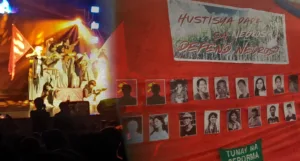

Nine years after the bloody Marawi Siege in 2017, thousands of Meranaw families remain “evacuees” in their own city. In a hybrid forum held in Cagayan de Oro City on May 25, victims demanded anew a Kambalingan or a safe, dignified, and genuine return to their communities. The forum titled “Reflections on Parallelism Between Marawi, Gaza, and Iran” aimed to show the similarity in patterns of displacement and militarization in Marawi City and in the Gaza Strip in Palestine and Iran.
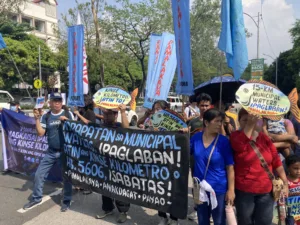
Many residents in what is dubbed as the “Most Affected Area” (MAA) are until now prohibited from returning. Instead of returning the land to residents, the state built infrastructure projects in four barangays in the MAA.
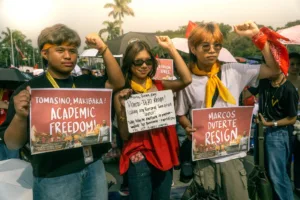
Groups such as the Reclaiming Marawi Movement (RMM) denounce the successive Duterte and Marcos regimes for prioritizing grand infrastructure instead of basic services. Government spending reached ₱1.17 billion for projects such as the Sarimanok Sports Stadium (₱199.9 million) and Lake Lanao Promenade (₱380 million). RMM Professor Tirmizy Abdullah said this commercialization is a “deliberate attack” on Meranaw residents’ culture. Meanwhile, displaced residents suffer in temporary shelters without sufficient water, electricity, and sanitation.
The process of compensating victims remains slow. Only 3,187 claims have currently been processed by the Marawi Compensation Board (MCB) out of an estimated 14,497 applicants, equivalent to only 22% of all victims. Many struggle from the complicated process and the loss of their documents during the Marawi Siege.
The Marcos regime’s measures, such as providing 392 housing units to evacuees in May, are tokenistic and extremely insufficient. More than 17,000 families currently remain in evacuation centers and face the threat of eviction as lease agreements on the land where their temporary shelters stand are set to expire.