
The curtain rises on yet another season of Philippine reactionary politics: familiar faces, recycled promises, and the steady hand of US imperialism behind the scenes. Indeed, elections under a semicolonial and semifeudal state like the Philippines will never be truly democratic. They remain a theater to entertain and pacify the masses, to maintain the grand illusion of “choice” designed to preserve the power of the ruling class while dangling the false promise of change.
Every three years, the Filipino people are made to line up and cast their votes in what is called a “free election.” The 2025 midterm elections were no different. From widespread vote manipulation, massive fraud, vote-buying, and red-tagging, to the brazen intervention of US imperialism, the results were precisely how it was designed to be: to maintain a puppet regime that tows the imperialist line, and repress the revolutionary movement at all cost.
A brief history of US control over Philippine elections
For over a century, the Philippine reactionary elections have been manipulated by US imperialism through its local agents. From the colonial occupation at the turn of the 20th century to the present neocolonial Marcos Jr. regime, elections have been used to legitimize the rule of landlords, as well as comprador and bureaucrat capitalists.
Historically, the US has actively intervened in Philippine reactionary elections. In 1953, the CIA openly backed Ramon Magsaysay’s presidential run, providing campaign advice, funds, and propaganda machineries to secure a puppet leadership loyal to US. The US Ambassador and CIA’s Edward Landsdale were directly involved in ensuring Magsaysay’s victory, defeating nationalist candidates who dared question the presence of US military bases in the country. Magsaysay was packaged by the CIA as a “man of the masses” to suppress popular unrest and present a palatable, populist alternative to growing revolutionary fervor. Under the careful orchestration of US advisers, Magsaysay’s image was crafted to appear humble, incorruptible and in touch with the common people despite how in reality, he enacted policies that preserved elite interests and deepened the country’s military and economic subservience to the US.
Likewise, the CIA supported the late dictator Ferdinand Marcos in his declaration of Martial Law in 1972. Years later, during the 1986 EDSA Uprising, the US facilitated Marcos and his family’s escape to Hawaii. At the height of the anti-dictatorship movement, the CIA recalibrated its strategy and activated its “reserve horses”: the pro-US liberal opposition. Seizing the moment, they helped catapult Cory Aquino to power by leveraging the “martyr’s widow” narrative, packaged further as the country’s return to “democracy.” Beneath the surface, however, the US had already laid the groundwork through covert operations aimed at weakening grassroots and revolutionary movements. US funding flowed through their agencies such as USAID, the National Endowment for Democracy (NED) and other NGOs that helped redirect popular unrest toward “safe” liberal reformism.
Manipulation, vote-buying and election-related violence
The 2025 mid-term elections in the Philippines were not only fraught with widespread technical failures and violence, but also bore the clear imprint of US interventionist tactics aimed at manipulating the country’s political trajectory. The malfunctioning of Automated Counting Machines (ACMs) across thousands of precincts, and the awarding of the election systems contract to the little-known South Korean firm MIRU Systems, are widely viewed as part of a broader US-orchestrated effort to dominate the country’s electoral infrastructure. MIRU’s ties to US defense and intelligence partners have raised alarms, especially amid opaque software version updates days before the elections—moves that allowed potential backdoor interference without public accountability. These technological manipulations enabled the undermining of candidates and parties critical of US military presence, neoliberal economic policies, and its backing of the Marcos Jr. regime.
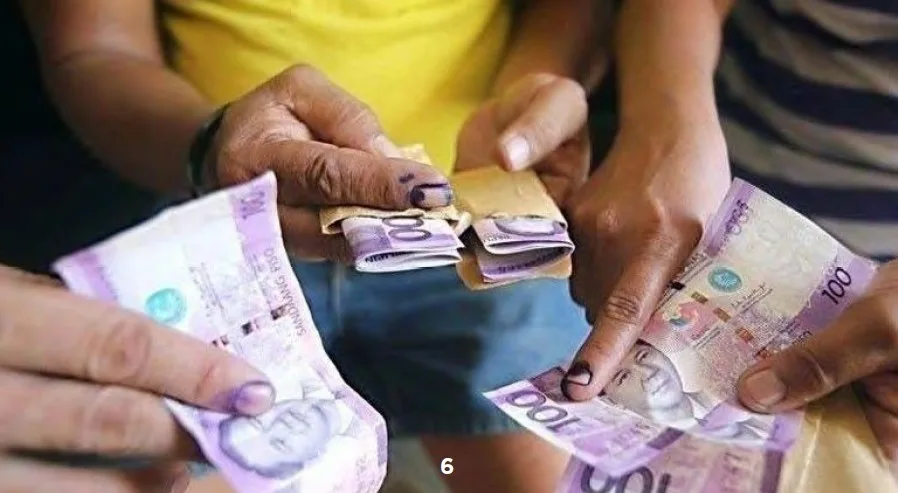
Equally alarming was the combination of traditional elite tactics—vote buying, intimidation, and election-related violence—with intensified red-tagging campaigns targeting progressive and anti-imperialist candidates. Many of these candidates and their volunteers were branded as “communist fronts” by state forces, a tactic long supported by US-funded counterinsurgency programs. These red-tagging efforts, paired with physical threats and media blackouts, silenced dissenting voices and disrupted grassroots campaigns rooted in people’s movements. Far from being isolated irregularities, these attacks on electoral integrity reflect a systemic design to protect US geopolitical and economic interests in the Philippines—ensuring that only pro-US elites gain or retain power while mass-based, nationalist alternatives are marginalized or violently suppressed.
Other forms of US interventionism
Beyond the Philippine reactionary state, the US has a long history of intervening in the domestic affairs of its neocolonies through a wide range of tactics. Beyond electoral manipulation and having “reserve horses”, the US has employed covert operations, CIA-backed coups, assassinations and targeted killings, as well as direct military interventions and proxy wars to influence, destabilize, or even overthrow governments it deems hostile or ideologically opposed to its interests, ultimately securing continued imperialist control and geopolitical dominance.
To cite a few examples: in 1953, the US overthrew Iranian Prime Minister Mohammad Mossadegh through a CIA-backed coup after he nationalized the country’s oil industry and was perceived to be aligning with the Soviet Union—developments that the US saw as threats to its interests. The coup, known as Operation Ajax, led to the reinstatement and consolidation of the US-backed authoritarian regime under Shah Mohammad Reza Pahlavi.
In 1961, in the Congo, the US—seeking to protect Belgian mining interests and uphold its anti-communist policy during the Cold War—instigated another CIA-backed coup in coordination with Belgian forces and Congolese politicians. Patrice Lumumba, a staunch anti-imperialist and leading figure in the struggle for Congo’s independence, was murdered shortly after being deposed as Prime Minister.
In addition to covert operations, the US has also directly intervened in foreign conflicts and waged proxy wars as part of its broader anti-communist campaign. One of the most prominent examples was the Vietnam War, which began in 1955, when the US provided support to the French-allied South Vietnamese regime against the communist forces led by Ho Chi Minh in North Vietnam. The conflict eventually escalated into a full-scale war, with the US suffering heavy losses at the hands of the Viet Cong and the North Vietnamese Army, who ultimately claimed victory over colonial and imperialist forces.
In 1979, the US openly backed the Afghan Mujahideen in their fight against the Soviet-allied government in Kabul. This support, part of a broader US strategy to counter Soviet influence during the Cold War, helped trigger a prolonged and devastating civil war. The Mujahideen were financed, armed, and trained by the US, primarily through the CIA’s Operation Cyclone, one of the agency’s longest and most expensive covert operations. In the aftermath of the conflict, elements of the Mujahideen evolved into extremist groups, with some members eventually forming the Taliban and Al-Qaeda.
The US has continued its proxy war strategy in the Russia–Ukraine conflict. It supported the 2004 Orange Revolution prior to aggressively pushing for Ukraine’s membership in NATO. A decade later, in 2014, it backed opposition forces (including the fascist Banderites/National-Socialist Party of Ukraine) during the Maidan protests, which culminated in the violent coup of pro-Russian President Viktor Yanukovych.
The rise of the “acceptable Left”
The US continues to apply these same tactics of manipulation whether openly or through their operatives, so it was a surprise to no one how the results of the mid-term elections turned out. While Marcos Jr. remains the primary representative of US interests in the Philippines, the US is far from placing all its bets on him. Aware of the growing political instability, deepening economic crises, and the steady erosion of Marcos Jr.’s legitimacy among broad sections of the population, the US is already preparing for a scenario in which Marcos becomes too unpopular or unstable to maintain effective control. True to its long-standing strategy, US imperialism has been quietly positioning its “reserve horses” – a set of US-aligned political figures who can step in to preserve US dominance in the event that Marcos Jr. can no longer be retained.
These reserve horses come in various forms: liberal reformists, recycled opposition figures and military or police-backed laders repackaged as “strongman alternatives.” Through funding of civil society proxies, intelligence coordination, and bankrolling campaign kitties, the US ensures that it can pivot to another loyal candidate without losing its grip on the country’s politics.
For instance, the electoral return of Kiko Pangilinan and Bam Aquino, placing second and fifth respectively, signaled that the US has started to position its bets beyond just the Marcos clique. The Liberal-Akbayan-Pink (LAP) coalition, which have previously also been aligned with US political forces, has been increasingly taking on this position. The return of these “palatable” candidates, sometimes touted as the “acceptable Left” must be seen for what it is: a deliberate strategy meant to defuse the growing tension boiling among the Filipino masses.
These political figures are not outsiders or challengers of the system – they are instead, its shock absorbers. They are deployed precisely at moments of deep crisis to co-opt the language of reform, speak in the idiom of the disillusioned, and drive the masses away from waging revolution. Their role is to absorb popular unrest, take the discontent of the masses, and package it into something non-threatening and ultimately loyal to the same system of US domination.
This has always been the function of the so-called liberal opposition in Philippine politics: to serve as “opposition” but within the boundaries set by the US. Their task is to redirect revolutionary energy into electoral dead-ends, to frame resistance as a matter of “good governance” and to denounce armed struggle as backward or violent.
By elevating liberal figures as the face of “change,” US imperialism creates a buffer zone between the ruling regime and the people’s seething anger. These figures are used to channel mass discontent away from revolution and into the arena of reforms and elections, where the outcome has already been rigged to serve comprador, bureaucrat capitalist, and foreign interests.
The final act
Whether under the banner of Marcos, Duterte, or their so-called liberal opposition, the system remains rigged against the masses and controlled by US imperialism. But even as the electoral circus parades new “winners” to pacify discontent, the people grow increasingly aware of the futility of relying on bourgeois politics to secure their liberation. The failure of the reactionary elections to deliver genuine change only deepens the crisis of legitimacy facing the ruling class. And each round of electoral fraud and manipulation erodes the people’s trust in the system, and sharpens their desire for national and social liberation.