
What was meant to be a moment of reckoning at the International Criminal Court (ICC) turned into another test of patience for families of Duterte’s drug-war victims this month, after judges paused pre-trial proceedings to examine a motion from former president Rodrigo Duterte’s legal team that he is “unfit to stand trial.” The move has been decried by victims’ groups and grassroots campaigners as an “insult to justice.”
Despite the postponement, various organizations under the Duterte Panagutin Europe Network travelled from across Europe to fill the streets of the Hague in a four-day “week of action” demanding the resumption of Duterte’s hearing, while also calling for Marcos Jr. to also be held to account for ongoing repression under his administration.
“I want them to proceed. I want to see him in court,” said one mother who lost children in anti-drug operations and has spent years pushing for justice. “Nine years na kaming naghihintay,” (We have been waiting for nine years), one grieving relative told the press. “We are ready at any hour. What we want is for the hearing to go on.”
Duterte’s lawyer, Nicolas Kauffman, filed for a motion to suspend the hearings on medical fitness grounds last August 18. On September 8, the ICC has agreed to probe those claims before moving forward, effectively postponing the scheduled confirmation-of-charges hearing. The Office of the Prosecutor and lawyers of victims have warned that motions on fitness or interim release can be used tactically to delay court proceedings.
Atty. Kristina Conti, an assistant to counsel representing families before the ICC, warned repeatedly that procedural requests must not be allowed to eclipse victims’ rights to an expeditious process. “We would want him alive for the trial,” Conti told reporters, while also cautioning that requests for interim release or claims of incapacity should be scrutinized and not treated as automatic grounds to derail the case.
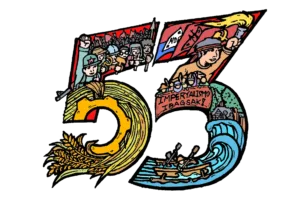
To protest the delay tactics of the Duterte Camp, the Duterte Panagutin Europe Network organized a packed program of demonstrations outside the ICC, a conference commemorating the 53rd anniversary of Martial Law, and a press briefing to amplify the victims’ continuing calls for justice.
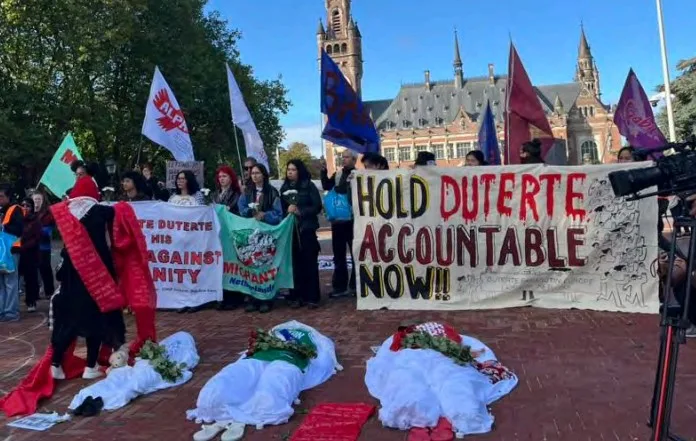
Lean Jimenez of BAYAN Europe, speaking at one of the demonstrations, framed the action as both a response to the postponement and as a warning about continuing abuses under Marcos Jr.’s government. “We will not let Duterte’s tactics of delay and his political allies rewrite history,” Jimenez said, urging Filipino migrant communities to keep pressure on the ICC and warn states that might consider hosting Duterte if interim release were allowed.
Human-rights alliance KARAPATAN, which has long documented drug-war killings and other rights abuses, condemned the suspension as an affront to families who have waited years for accountability. Cristina “Tinay” Palabay, KARAPATAN’s secretary-general, told delegates and the press that signatory states to the Rome Statute should not be complicit in enabling evasion of justice. She urged ICC member states not to accept custody transfers motivated by political sheltering and warned against any backroom deals to remove Duterte from the Court’s reach.
Palabay and allied groups explicitly linked the dispute over Duterte’s court appearance to a broader fight against impunity in the Philippines, arguing that the same networks that enabled the drug-war killings remain active and that domestic accountability mechanisms under Marcos Jr. remain too weak, if not absent.
Meanwhile, victims’ counsels have made clear they will press the ICC to advance procedural stages where permitted by the Rome Statute and the Court’s rules. Conti and others argued that certain elements of the confirmation process (including consideration of the prosecution’s evidence and victims’ submissions) can go forward even if the accused’s physical presence remains in question. That approach, they say, protects victims from indefinite postponement while still respecting due process.
One activist-mother at the Hague actions described the long haul of grief: years of unanswered letters, stalled national inquiries, and the sense that justice is always being deferred. “We do not want political theater. We want the truth. We want answers,” she said, echoing a chorus of families who said every procedural pause re-opens old wounds.
The ICC judges are set to decide whether to accept the defense’s claims about Duterte’s fitness, and how that affects the court’s schedule.