
The US-Israel’s war of aggression against Iran has driven a surge in oil prices in the world, gravely affecting import-dependent countries such as the Philippines. To date, the price of crude oil hits $116 a barrel.
On March 19, 2026, the Philippine transport group PISTON organized a transport strike against oil price hikes demanding the following: rollback of oil prices, removal of the Value Added Tax and excise taxes, junking of the Oil Deregulation Law, state control over the oil industry, fare increases, higher wages across the board, and an end to the US-Israel wars of aggression against Iran and Lebanon.
The protest forced the Marcos Jr’s regime to provide Php 5,000 subsidies for public transport drivers and to order the suspension of excise taxes. However, the distribution of subsidies proved chaotic and a nightmare for many drivers. They lined up the whole day only to receive nothing, as their names were missing or removed from the list of beneficiaries.
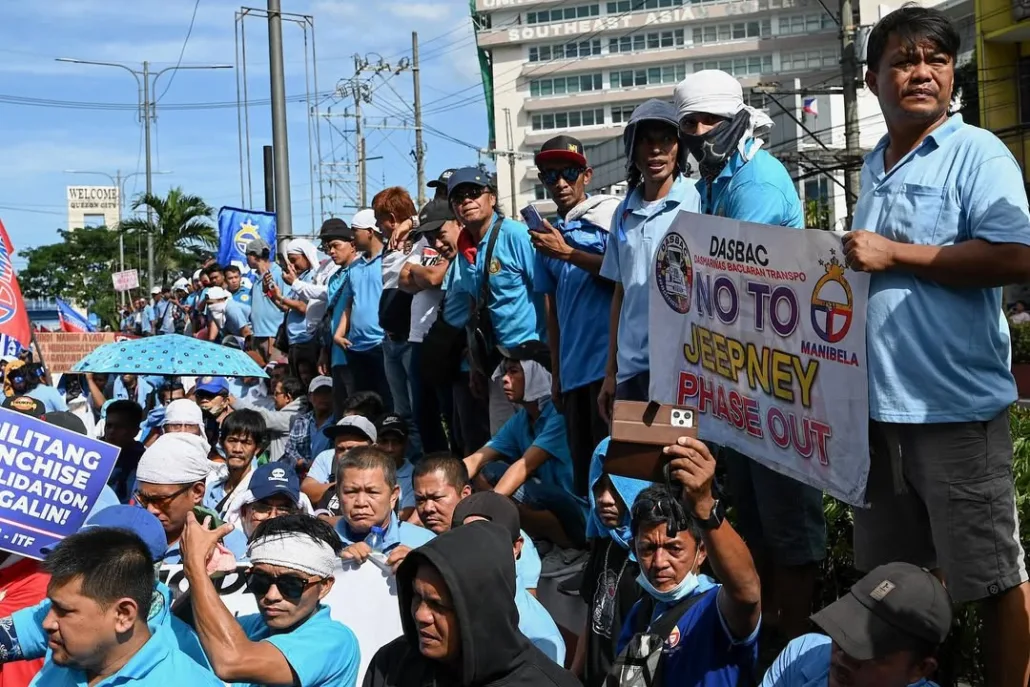
Public transport drivers suffer from the rising fuel prices
A jeepney driver plying the Manila – Makati route works more than 12 hours but earns only Php 300, as diesel prices have soared to over Php 100 per liter. Even after negotiating a reduction in his boundary from Php 1,000 to Php 800, he is left with barely enough, setting this amount aside for the next day’s grind.
Marissa, the wife a PISTON driver, shares that before the oil price hikes, her husband earned between Php 700 and Php 800 a day for 12 hours of work. Due to oil price hikes, he now earns only Php 200 to Php 300 a day. With this income simply not enough, Marissa and her family survive only on rice with bagoong (fermented fish paste), and at times, go to bed hungry.
Another jeepney driver laments that after working for the whole day, his earnings go to diesel amounting to Php 1,200 and to his boundary payment to the operator, leaving him with only Php56 pesos—not even enough to buy a kilo of rice priced at Php 60.
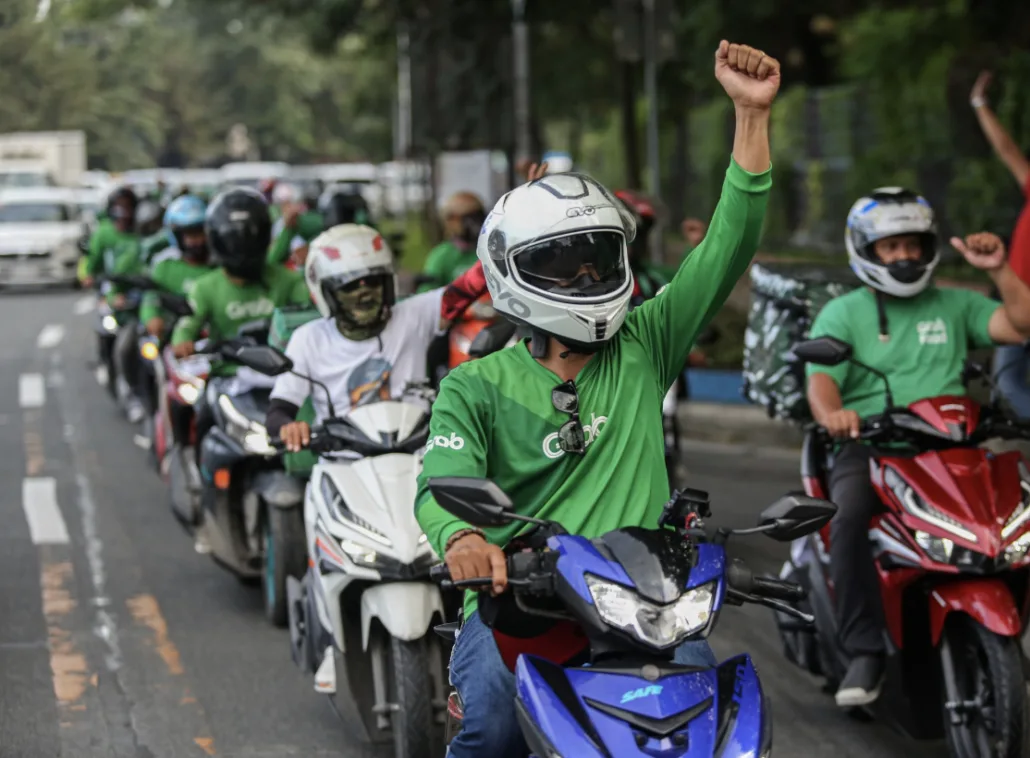
A Grab driver from General Santos City breaks down his Php 1,953 earnings after 12 hours of work: Php 1,000 for fuel, Php 900 for car lease (boundary) and Php 50 for phone load, leaving him with only Php 3.00 for his family.
A 72-year old driver collapsed and suffered from seizure while waiting in line. First-aid responders attributed this to prolonged hunger.
While the subsidy provided temporary relief for many drivers, who had stopped plying their routes as they barely keep a living, transport groups continue to call for long-term solutions, including lowering the prices of fuel and basic commodities. According to PISTON, the 5,000-peso aid only goes to fuel costs which means it is the oil cartels that the state is actually subsidizing.
The groups also argued that removing excise taxes on fuel would benefit the drivers, their families, and the public consumer. However, the suspension will only take effect 15 days after Malacañang’s announcement.
Marcos Jr likewise declared a state of National Energy Emergency on March 25, 2026 despite insisting a day earlier that there was sufficient energy supply. His regime promised fuel supply stability and financial subsidies for the transport sector. For transport groups, however, this response is nothing more than a band-aid solution.
To further reiterate the strikers’ demands, a two-day nationwide people’s strike was held from March 26 to 27, 2026 by a newly formed group, the No to Oil Price Hike Coalition. It is an alliance of drivers and operators of public utility jeepneys (PUJ), UV Express, MC Taxi, transport network vehicle services (TNVS), buses, and tricycles, as well as of motorists, commuters and other sectors.
The strike was widely supported, demonstrating the collective strength and unity of the transport workers, various communities and the broader masses. The coalition is planning to stage larger people’s strikes in the coming days.