

Under the rule of madman US President Donald Trump and his puppet Marcos Jr. regime, the Philippines is being rapidly transformed into a forward military and economic outpost of US imperialism in the Asia-Pacific. Alongside expanding military agreements, basing access, and constant war exercises, a new instrument of US plunder and control has emerged under the so-called Pax Silica initiative.
What is Pax Silica?
Pax Silica is a US-led alliance to reorganize global supply chains for artificial intelligence, semiconductors, so-called “critical minerals,” and advanced technologies.
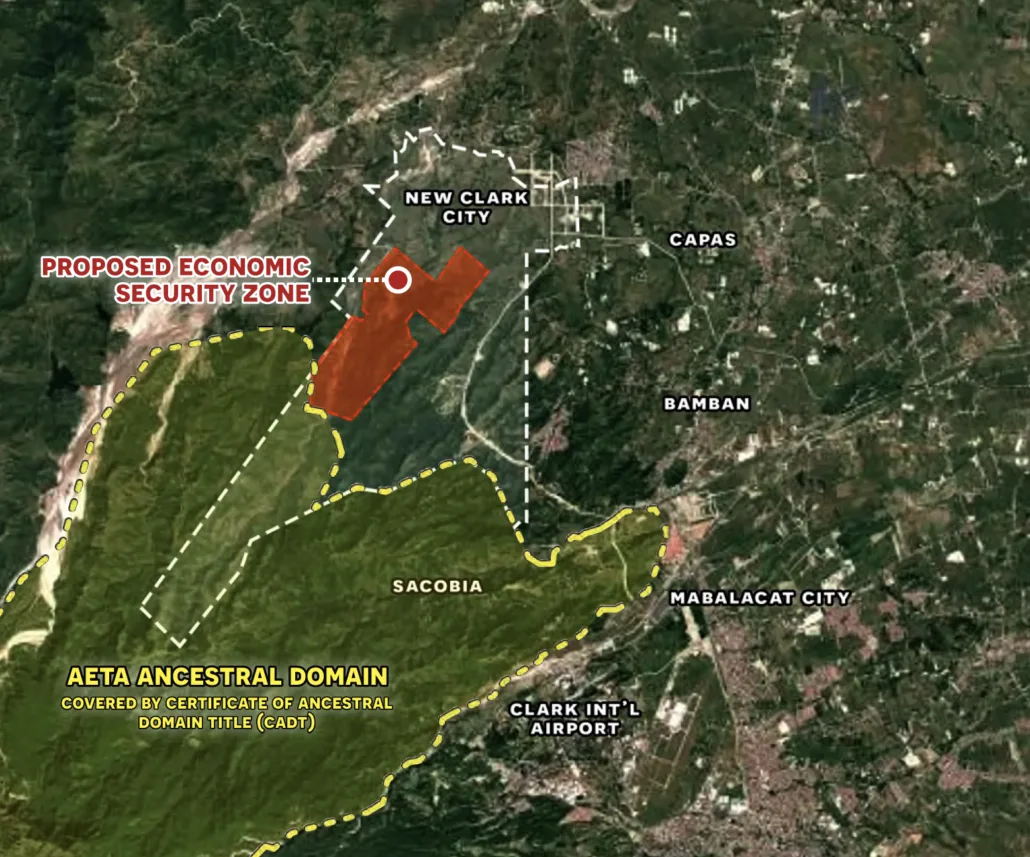
At the center of this initiative is a new 1,619-hectare “economic security zone” in Luzon, designed as a strategic hub linking mining, manufacturing, data infrastructure, and logistics into a US-directed industrial network.
Launched in December 2025, the so-called Pax Silica Coalition expanded to 24 member countries including:
- United States
- Australia
- Israel
- Japan
- South Korea
- Singapore
- United Arab Emirates (UAE)
- United Kingdom
Recent additions:
- Argentina
- Chile
- Costa Rica
- El Salvador
- European Union
- Finland
- Germany
- Greece
- India
- Kazakhstan
- Netherlands
- Norway
- Panama
- Philippines
- Qatar
- Sweden
Note: Taiwan also observes and endorses the Pax Silica Declaration
Pax Silica is part of a broader strategy by the US to reorganize global production networks amid intensifying inter-imperialist rivalry with China. By securing control over semiconductor production, AI infrastructure, and critical mineral supply chains, the US seeks to maintain dominance in the most strategic sectors of the global economy and strengthen its capacity for technological and military warfare.
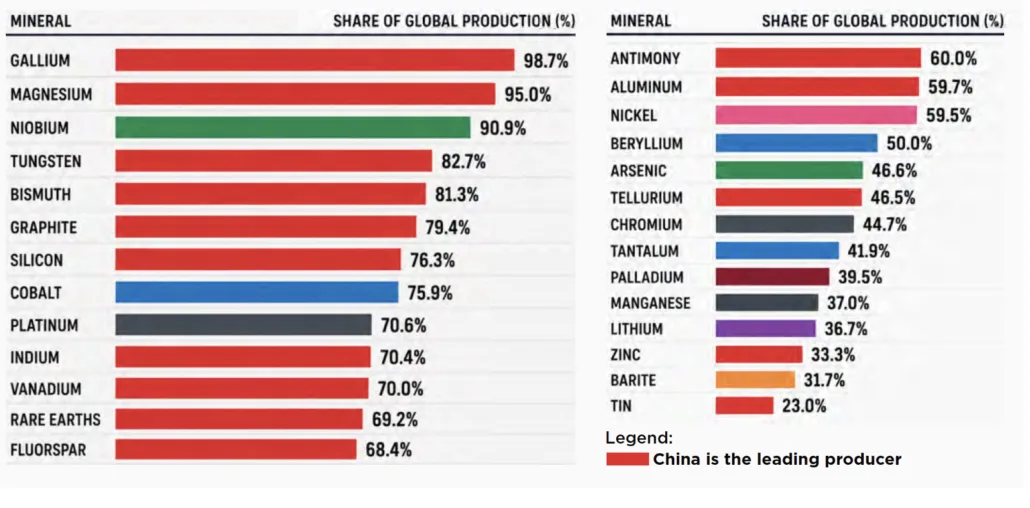
Right now, China plays a very strong role in these global supply chains. It is not only a major manufacturer of electronics, but more importantly, it dominates many of the early and middle stages of production such as processing rare earth minerals and producing key industrial materials needed for chips and high-tech devices. The US, on the other hand, has weakened its own industrial base over decades of neoliberal globalization and relying more on finance and services than manufacturing.
This is why the US is trying to rebuild its own supply chains with its neocolonies such as the Philippines under initiatives like Pax Silica. In simple terms, Pax Silica is part of the US attempt to catch up and reorganize global production so it can compete more effectively with China.
Why is the Philippines important to this initiative?
The Philippines occupies a key position in this design. Rich in mineral resources such as nickel, copper, chromite and cobalt, and strategically located along vital sea lanes, the country is being integrated into a system of supply chains that serve US monopoly capital and its war-driven agenda.
How does Pax Silica relate to the US imperialist war agenda?
Two things are immediately clear.
First, Pax Silica does not aim at genuine industrialization that benefits the Filipino people. Instead, it expands and deepens the country’s role as a semi-processing and low-value production hub, where raw materials are extracted, minimally processed, and exported for higher-value production abroad. The initiative ensures that US corporations and their local comprador partners monopolize the extraction of “critical minerals,” rare earth elements, and other strategic resources while relying on cheap Filipino labor for assembly, logistics, and support operations.
Official descriptions of the Pax Silica initiative frame it as a “secure supply chain” hub for semiconductors, artificial intelligence, critical minerals, and advanced manufacturing within a broader allied system led by the US. In practice, this means the Philippines is positioned as a mere node in a wider chain where higher-value activities such as chip design, advanced AI development, intellectual property creation, and strategic decision-making all remain concentrated in the US and other advanced capitalist economies. What is being located in the Philippines are the lower and mid-tier segments of production such as mineral extraction, basic processing, assembly, testing, logistics, and support services. This reproduces the country’s long-standing role as a supplier of cheap labor and raw materials. Even proponents of the Luzon Economic Security Zone acknowledge that its purpose is to “move the Philippines up the supply chain ladder,” which itself implicitly confirms that the plan remains to keep the country locked into low-value roles rather than breaking free from them.
Second, the timing reveals its strategic purpose as part of the US war agenda. These supply chains are essential to the United States’ preparation for present and future wars of aggression in the Asia-Pacific. The same industrial and logistical infrastructure being promoted under Pax Silica will directly support the production of advanced weapons systems, ammunition, electronics, and war materiel needed for US military operations in the region.
Pax Silica must be understood alongside the accelerating militarization of the Philippines under the Marcos regime. The country is being converted into a forward military base of US imperialism through the expansion of EDCA sites, Balikatan and Salaknib war exercises, and new logistical and operational facilities for US forces.
From Subic Bay’s ammunition facilities to the Davao oil depot, and through US-linked corporations such as Moog Controls Corporation in Benguet, Collins Aerospace in Batangas, and Valar Atomics in Metro Manila, US imperialism is leaving an increasingly heavy footprint across the Philippine economy. These installations seek to blur the line between “economic development” and outright war preparation, embedding the country deeper into the US war machine.
The Luzon “economic security zone” under Pax Silica is not separate from this broader strategy. It complements the growing network of US military-linked production and logistics facilities that serve both commercial and war-making purposes. In this sense, the Philippines is being shaped not only as a cheap labor platform but also as a strategic staging ground for US military and economic domination of Asia.
How will Pax Silica impact the Filipino people?
While foreign corporations secure access to land, minerals, and infrastructure, Filipino workers remain trapped in low wages, precarious employment, and contractual labor. The minimum wage in Central Luzon (Region III) ranges between P515 to P600 way below the Family Living Wage in the region at P1,201. In addition, the AI hub being located within an export processing zone effectively allows capitalists to effectively lower the minimum wage bar due to widespread labor standard exemptions and exploitation. Peasants in the area will continue to lose land to mining, plantations, and infrastructure corridors tied to foreign investment. National minorities face displacement and environmental destruction as extraction expands.
Even the promise of employment coming from this initiative must be viewed critically. Jobs created under such schemes are likely to be concentrated in low-wage assembly, logistics, and service work, while high-value design, research, and technological control remain in the hands of foreign capitalist control.
At the same time, the expansion of militarized economic zones increases the risk of greater state terror in neighboring areas in Central Luzon. Areas prioritized for foreign investment are often accompanied by heightened security operations, surveillance, and the suppression of community resistance to land grabbing, mining, and environmental destruction.
Pax Silica also seeks to recruit Filipino scientists, engineers, and STEM professionals into the service of imperialist production and war. By integrating local technical labor into global supply chains controlled by US corporations, it channels local scientific capacity away from national development and toward foreign strategic objectives.
This raises a fundamental contradiction: science and technology under imperialism do not serve national progress but reinforce dependency and exploitation. The Philippines does not lack technical talent or natural resources; it lacks sovereign control over how these are developed and utilized. From a national-democratic perspective, the question is not whether to reject science or technology, but whose interests they serve.
Why should the Filipino people reject Pax Silica and fight for genuine national industrialization?
The Filipino people should reject Pax Silica because it does not offer genuine development, but a deeper form of economic dependency. Instead of building an independent industrial base that can process raw materials, produce machinery, and develop its own technological capacity, Pax Silica confines the Philippines to low-value activities such as extraction, assembly, and support services within a US-led and dominated supply chain. This means that even as advanced technologies like artificial intelligence and semiconductors are developed on Philippine soil, the country remains fundamentally excluded from the benefits of these technologies.
The expansion of Pax Silica and related US-led initiatives has sharpened the urgency of the struggle for genuine national industrialization. Real development cannot be achieved through US-controlled enclaves designed for extraction, cheap labor, and military integration.
Instead, it requires breaking the structural control of foreign monopoly capital over the economy, asserting national sovereignty over resources, and building an independent industrial base oriented toward the needs of the Filipino people.
Patriotic and revolutionary STEM professionals and students have a critical role to play in this struggle. They must expose and oppose imperialist projects like Pax Silica and the operations of US-linked corporations embedded in the Philippine economy. More importantly, they must align scientific and technical expertise with the struggle for national and social liberation.
At the same time, we must also advance the struggle for genuine agrarian reform as it is only through the free distribution of land and the modernization of Philippine agriculture can national industries have a solid base to develop in a sustainable manner.
Ultimately, the struggle against Pax Silica is part of a broader struggle to break away from US imperialist control, feudalism and bureaucrat capitalism. As the Philippines is further drawn into US war preparations and economic control, the fight for genuine independence and development becomes ever more urgent.